Whole Foods vs Processed: Key Differences
Compare nutrient profiles of whole and processed foods to understand how food preparation affects nutritional content.
Introduction
Food processing encompasses a wide range of techniques, from simple preservation methods to complex industrial processing. Understanding how processing affects food composition helps contextualize choices about different types of foods available in modern food systems.
What is Food Processing?
Food processing refers to any modification made to food from its raw state. This can include:
- Minimal processing: Cleaning, cutting, freezing, drying (e.g., frozen vegetables, canned beans)
- Moderate processing: Pasteurization, fermentation, canning (e.g., yogurt, pickled vegetables)
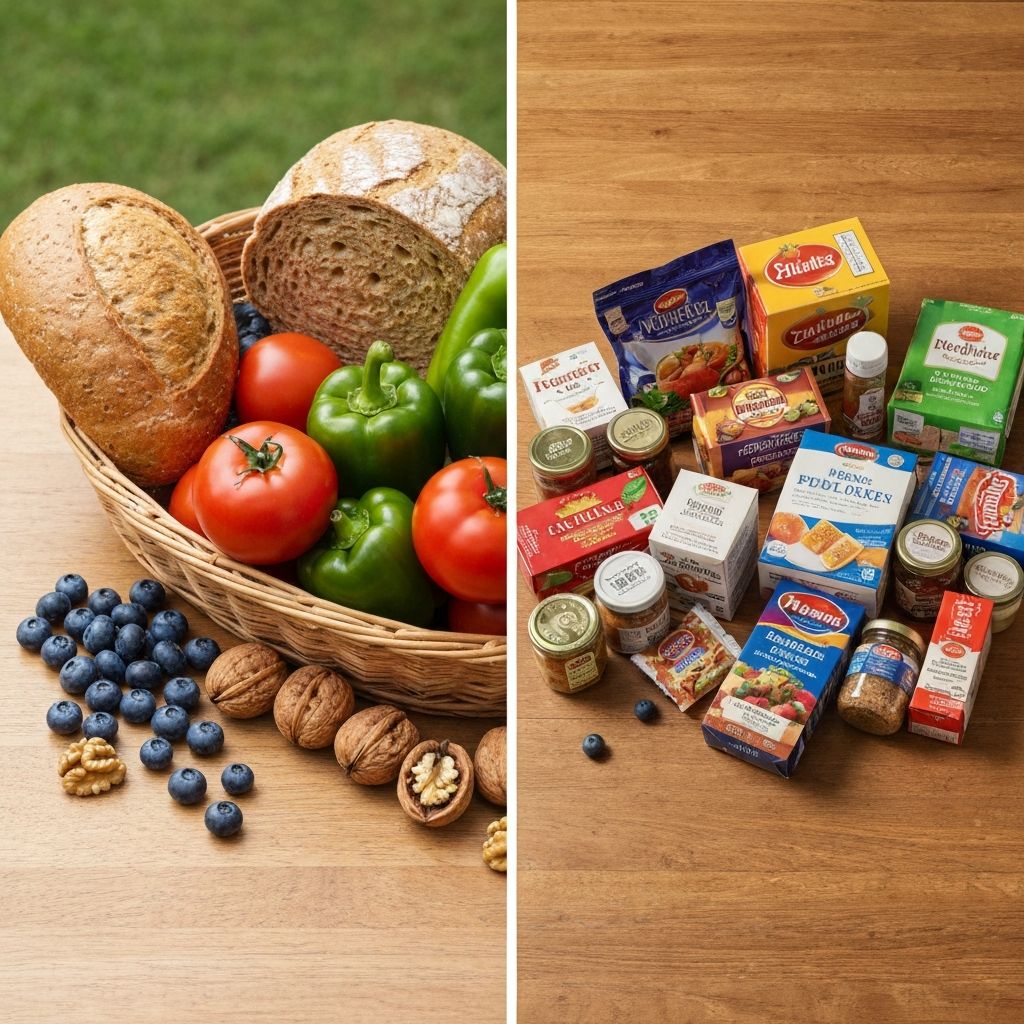
- Extensive processing: Multiple ingredient combining with additives, refined oils, added sugars (e.g., packaged snacks, ready-to-eat meals)
Whole Foods Characteristics
Definition: Whole foods are foods that have undergone minimal or no processing from their natural state. Examples include fresh vegetables, fruits, grains in their original form, legumes, nuts, and unprocessed meat and fish.
Nutritional Advantages:
- Retain natural fiber content, supporting digestive function and satiety
- Preserve micronutrient density—vitamins, minerals, and phytonutrients
- Contain no added sugars, refined oils, or artificial additives
- Nutrient absorption may be optimized by natural compound combinations
Considerations: Whole foods typically require preparation and cooking, which may be less convenient than ready-to-eat options. Cost can vary; some whole foods are affordable staples, others may be expensive.
Processed Foods: Benefits and Drawbacks
Food processing technologies serve important purposes including food safety, shelf-life extension, and convenience. However, they can also affect nutritional composition.
Processing Benefits:
- Extends shelf life, reducing food waste
- Kills harmful bacteria, improving food safety
- Increases accessibility to foods year-round
- Adds convenience for busy lifestyles
- Can preserve nutrients (e.g., freezing retains vitamins)
Potential Nutritional Effects:
- Nutrient loss: Heat, water exposure, and air can degrade some vitamins and phytonutrients
- Fiber reduction: Refining grains removes the fiber-rich outer layers
- Added sugars: Many processed foods contain added sugars beyond natural content
- Added sodium: Salt is used as a preservative and flavor enhancer
- Additives: Colors, flavors, and preservatives may be added for commercial purposes
Specific Examples
Whole Grain vs Refined Grain:
- Whole grain: Contains bran (fiber, minerals), germ (protein, healthy fats), and endosperm (starch). ~3g fiber per serving.
- Refined grain: Bran and germ removed, leaving mainly starch. ~1g fiber per serving. Often enriched with added vitamins and minerals to replace some lost nutrients.
Fresh vs Canned Vegetables:
- Fresh: Peak nutrition shortly after harvest; quality declines during storage
- Canned: Processed immediately after harvest, preserving nutrients; may contain added sodium
- Frozen: Processed quickly after harvest; typically preserves nutrients well
Plain Yogurt vs Sweetened Yogurt:
- Plain: Contains natural milk sugars (~12g per 100g serving)
- Flavored: Contains natural milk sugars plus added sugars (often 15-25g total per serving)
Not All Processing is Equal
It's important to recognize that not all processing is harmful. Examples of processing that maintains or supports nutrition:
- Freezing vegetables immediately after harvest preserves nutrients
- Pasteurization makes milk safe without significantly affecting nutrition
- Fermentation (as in yogurt) can enhance nutrient bioavailability
- Canning preserves nutrients and extends access to certain foods
Practical Considerations
A balanced food strategy might include:
- Prioritizing whole foods as the foundation of the diet
- Using convenient processed options when they support dietary goals
- Reading labels on processed foods to check for added sugars and sodium
- Using minimally processed options (frozen vegetables, canned beans without added sodium) when whole food isn't available
- Recognizing that some processed foods are nutritionally adequate and accessible
Key Takeaways
Whole foods typically retain more nutrients and fiber than heavily processed alternatives, but processing serves important purposes including food safety and accessibility. Understanding how different processing methods affect nutrition allows for informed choices based on individual circumstances, preferences, and needs.